
Baby Carriers to Avoid: Unsafe Designs That Put Your Baby at Risk

The Indian market is flooded with baby carriers to avoidbaby carriers to avoidbaby carriers to avoidbaby carriers to avoidbaby carriers to avoidbaby carriers to avoidbaby carriers to avoidbaby carriers to avoidbaby carriers to avoidbaby carriers to avoidbaby carriers to avoidbaby carriers to avoidbaby carriers to avoidbaby carriers to avoidbaby carriers to avoidbaby carriers to avoidbaby carriers to avoidbaby carriers to avoidbaby carriers to avoidbaby carriers to avoidbaby carriers to avoidbaby carriers to avoidbaby carriers to avoid-designs that prioritize cost-cutting over infant safety. With online marketplaces making it easier than ever to buy parenting gear, many first-time parents in Mumbai, Bengaluru, and tier-2 cities are unknowingly purchasing carriers that can cause lasting developmental harm. This isn't about being paranoid; it's about understanding that a baby's hips, spine, and airways are still developing, and the wrong carrier can interfere with that natural process.
According to the Indian Academy of Pediatrics, developmental dysplasia of the hip (DDH) affects approximately 1-2% of Indian infants, with improper positioning being a significant preventable risk factor. Yet most parents don't know what "proper positioning" actually looks like until something goes wrong. Let me walk you through the specific carrier features that experts warn against, real examples I've seen in Indian stores and on Amazon.in, and safer alternatives that won't break your budget.
Dangerous Feature 1: Narrow Seat Base and Dangling Legs
The single most dangerous design flaw in budget baby carriers sold across India is the narrow crotch seat. You've probably seen these-carriers where the baby's weight rests entirely on their crotch and genitals, with legs dangling straight down like a parachute harness. This position is medically termed "crotch dangling" and it's terrible for hip development.
Here's why this matters: babies are born with soft cartilage in their hip joints that gradually hardens into bone. The ideal position for healthy hip development is the "M-position" or "frog position"-hips spread apart, thighs supported, knees higher than the bottom, forming an M-shape when viewed from the front. The International Hip Dysplasia Institute explicitly recommends this positioning, and IAP guidelines echo this for Indian parents.
Carriers with narrow seats force the legs together and down, putting constant pressure on the hip joint in exactly the wrong direction. Over weeks and months of use, this can contribute to hip dysplasia-a condition where the hip socket doesn't properly form around the femoral head. I've seen this design in countless carriers at baby stores in Chennai and Pune, often marketed as "lightweight" or "compact" options priced between Rs. 400-900.
What to look for instead: The seat base should extend from knee to knee when your baby is in the carrier. Your baby's thighs should be supported almost to the knee, with the fabric spreading across the back of the thighs rather than bunching between the legs. When you look at your baby from the front, their legs should form a clear M or frog shape, with knees noticeably higher than their bottom.
Real example of a safe design: The Ergobaby Omni 360 (Rs. 12,999 on Amazon.in) has an adjustable seat width that grows with your baby, maintaining proper hip positioning from newborn through toddler stages. Yes, it's expensive, but compare that to potential orthopedic treatment costs or even corrective surgery for hip dysplasia, which can run into lakhs.
Dangerous Feature 2: Forward-Facing-Only Carriers
Walk through any mall in Jaipur or Lucknow and you'll spot parents using carriers with their babies facing outward, looking at the world. It looks adorable in photos, and many carriers marketed in India are designed exclusively for this forward-facing position. But here's what paediatricians want you to know: forward-facing is the least safe carrying position, and should only be used for short periods with older babies who have full head and neck control.
The problems with forward-facing carriers are multiple. First, they provide no head or neck support-your baby's head can flop forward, potentially restricting airway. Second, they overarch the baby's spine in a C-curve that puts pressure on developing vertebrae. Third, they offer no protection for the baby's airways-if you lean forward, bend down, or stumble, your baby's face is completely exposed.
Additionally, constant forward-facing can be overstimulating for young babies. They can't turn away from stimuli or bury their face in your chest when overwhelmed, which can lead to fussiness and poor sleep. The IAP recommends inward-facing positioning for at least the first six months, until babies have developed strong neck and trunk control.
I made this mistake myself. When my son was four months old, I bought a forward-facing carrier because he seemed curious about the world. Within 20 minutes at the market, he was screaming-not because he was uncomfortable physically, but because he was sensory overloaded and couldn't escape. That carrier now sits unused.
Many cheap carriers sold online are forward-facing only, with no option to position the baby inward. These are baby carriers to avoid entirely for newborns and young infants. Even for older babies (6+ months), forward-facing should be limited to 20-30 minute sessions, not hours-long outings.
What to look for instead: A multi-position carrier that allows inward-facing (with proper head support), hip carry, and back carry positions. Forward-facing should be an option, not the only option. The R for Rabbit Upsy Daisy (Rs. 2,799) is an Indian brand that offers four carrying positions, making it a safer budget option that grows with your child.
Dangerous Feature 3: Inadequate Head and Neck Support for Newborns
Newborns and young babies cannot control their head and neck muscles. Full head control typically develops between 3-4 months, but varies by child. Until then, any baby carrier must provide structured support that keeps the airway open and the head from flopping forward, backward, or to the side.
Positional asphyxia-when a baby's position restricts their breathing-is a serious risk that many parents don't know about. It can happen when a baby's chin tucks down toward their chest, closing off the airway. In a carrier without proper head support, this can occur if you lean forward, if the fabric is too loose, or if the baby falls asleep and their head drops.
I've seen numerous carriers on Amazon.in and in stores across Bengaluru that are essentially just fabric pouches with straps-no structured support, no adjustable head rest, no way to ensure the baby's neck is properly positioned. These are often marketed for "0+ months" which is dangerously misleading.
Warning signs of inadequate support: Fabric that's too stretchy, allowing the baby to slump. No head support pillow or panel for newborns. No way to tighten or adjust the fit around the baby's body. If you can't maintain your baby in an upright position with their chin off their chest without holding their head with your hand, the carrier is unsafe.
According to WHO guidelines on safe infant positioning, babies should always be positioned so you can see their face, their chin is off their chest, and their back is supported in a natural curve. A proper carrier should achieve this automatically through its design, not require you to constantly adjust.
What to look for instead: Structured carriers with adjustable infant inserts, built-in head support panels, or sleeping hoods that support the head from behind without pressing it forward. The carrier should hold your baby firmly against your body-you should be able to kiss the top of their head easily, which means their face is visible and their airway is open.
Dangerous Feature 4: Poor Quality Materials and Construction
This is where many budget carriers fail catastrophically. I've heard multiple stories from parent groups in Mumbai and Delhi about carrier straps tearing, buckles breaking, or fabric ripping while the baby was being worn. This isn't just about durability-it's about your baby falling.
Common quality issues in cheap carriers available in India include: thin fabric that tears under weight, low-quality buckles that snap or come undone unexpectedly, stitching that unravels after a few uses, shoulder straps that stretch and lose support, and non-breathable synthetic materials that cause heat rash in Indian summers.
The BIS (Bureau of Indian Standards) has yet to establish mandatory safety standards specifically for baby carriers in India, which means there's no official certification many manufacturers need to meet. This regulatory gap allows substandard products to flood the market, especially online. Carriers priced under Rs. 800 almost always compromise on materials-they have to, given the cost of safe manufacturing.
Heat and breathability are particularly critical in Indian climates. I live in a tier-1 city where summer temperatures hit 40°C. Using a carrier made of thick, non-breathable polyester is torture for both parent and baby-we're both drenched in sweat within minutes, and prolonged skin contact in that heat can cause severe rashes and discomfort.
I once bought a carrier from a popular marketplace that looked identical to a premium brand in photos. It cost Rs. 750. The fabric felt slightly off, but I didn't think much of it until the third use, when I noticed the stitching on one shoulder strap starting to separate. That carrier could have failed completely if I hadn't caught it. It went straight in the trash.
What to look for instead: Carriers from established brands that specify fabric content, weight limits, and safety testing. Look for materials like cotton, linen, or mesh panels for indian weatherfor indian weatherfor indian weatherfor indian weatherfor indian weatherfor indian weatherfor indian weatherfor indian weatherfor indian weatherfor indian weatherfor indian weatherfor indian weatherfor indian weatherfor indian weatherfor indian weatherfor indian weatherfor indian weatherfor indian weatherfor indian weatherfor indian weatherfor indian weatherfor indian weatherfor Indian weather. Check reviews specifically mentioning durability after 6+ months of use. Pay attention to buckle quality-YKK and Duraflex are reliable buckle brands used in quality carriers.
For Indian conditions, the R for Rabbit Upsy Daisy (Rs. 2,799) uses breathable mesh panels and has reinforced stitching. For those who can invest more, the Ergobaby Omni 360 (Rs. 12,999) is built to handle multiple children over years of use, with thick padding, sturdy buckles, and machine-washable fabric that holds up in our climate.
Baby Carriers to Avoid: Specific Red Flags
Let me be direct about carrier types I recommend avoiding completely based on safety concerns:
Bag-style sling carriers: These are fabric pouches worn across one shoulder. While traditional cloth carriers used across Indian villages can be safe when used correctly, the cheap bag-style slings sold online often position babies in a curved, chin-to-chest position with no visibility. The UK trading standards have banned certain models due to asphyxiation risks. If you can't see your baby's face, it's not safe.
Hip seat carriers without back support: Hip seats alone can be useful for older babies who sit independently, but many sold in India are marketed for younger babies without proper back support or safety harnesses. A baby can easily slide off or be dropped if you bend or stumble.
Unbranded carriers from unknown sellers: If the listing doesn't specify the brand name, manufacturing details, or weight limits, skip it. I've seen listings on marketplaces that literally state "imported from China" with no brand, no safety information, just low prices (Rs. 400-600 range). These are the baby carriers to avoid at all costs-you have no recourse if something fails, no warranty, no customer service.
Carriers that claim "0-36 months" with no adjustability: A carrier cannot safely accommodate a 3kg newborn and a 15kg toddler without significant adjustability. Claims like this are marketing nonsense. Safe carriers specify minimum weight (usually 3.5-4kg or "after 1 month") and include adjustable features for different stages.
Front-facing-only carriers with thin straps: If all the baby's weight is on your shoulders through thin straps, you'll be in pain within 15 minutes. More importantly, if the carrier is uncomfortable for you, you're more likely to use it incorrectly or discontinue use, defeating the purpose. Proper carriers distribute weight across your hips and shoulders through thick, padded straps and a supportive waist belt.
What Indian Parents Should Look For: Safe Carrier Checklist
After three years of using carriers with two children, here's my practical checklist for evaluating any baby carrier in India:
Hip-healthy seat: Fabric extends from knee to knee. Baby's knees are higher than their bottom in an M-shape. Thighs are supported, not dangling.
Multiple carrying positions: At minimum: inward-facing for newborns with head support, and back carry for older babies. Forward-facing is optional, not essential.
Adjustability: Straps, seat width, and panel height should adjust as your baby grows. You should be able to tighten or loosen easily while wearing.
Weight distribution: Wide, padded shoulder straps and a substantial waist belt that sits on your hips, not your waist. Quality carriers distribute weight like a hiking backpack, not a shoulder bag.
Quality materials: Breathable fabric suitable for Indian weather. Check for mesh panels, 100% cotton, or linen options. Avoid thick polyester for year-round use.
Secure fastenings: High-quality buckles with safety mechanisms. Multiple points of security-if one buckle fails, the carrier should still be secure. Reinforced stitching at all stress points.
Clear instructions: Proper carrier use isn't instinctive. Safe carriers come with detailed instructions, often with video tutorials. If the packaging or product page provides no guidance, that's a red flag.
Appropriate age labeling: Honest weight and age minimums. Most experts recommend waiting until baby is at least 3.5-4kg (usually 1 month old) before using a structured carrier, and 7-8 pounds for fabric wraps. Newborn-appropriate carriers should explicitly include an infant insert or built-in support system.
Safer Alternatives Available in India
The good news is that you don't need to choose between safety and affordability, though you do need realistic expectations. Here are options at different price points available on Amazon.in:
Budget-friendly (Rs. 2,000-3,500): The R for Rabbit Upsy Daisy (Rs. 2,799) is the best Indian brand option I've tested. It has four carrying positions, decent padding, breathable mesh, and proper hip positioning. It's not as durable as premium brands, but for regular use through one child, it's solid. LuvLap Elegant (Rs. 2,299) is another option with good reviews, though I found the shoulder padding insufficient for extended wear.
Mid-range (Rs. 5,000-8,000): Infantino Flip 4-in-1 (Rs. 5,499) and Baby Bucket 5-in-1 (Rs. 4,999) offer multiple positions and better construction than budget options. I used the Infantino with my second child and found it comfortable for 45-60 minute sessions, though not ideal for all-day wearing.
Premium (Rs. 10,000+): Ergobaby Omni 360 (Rs. 12,999) is the gold standard-ergonomic for parent and baby, extremely well-constructed, and genuinely comfortable for hours. The Omni 360 Cool Air Mesh version (Rs. 15,999) is worth the premium in hot cities. Babybjörn One (Rs. 18,999) is another excellent option with slightly easier adjustments but less padding than Ergobaby.
For those interested in traditional options, a well-tied ring sling or woven wrap can be very safe and comfortable, especially in Indian heat. Brands like Chimparoo (Rs. 4,500-6,500) and Boba (Rs. 5,999) offer proper baby-wearing wraps. However, wraps have a learning curve-you need to learn proper tying techniques, which isn't intuitive. I'd recommend watching multiple video tutorials or taking a baby-wearing workshop if available in your city before relying on a wrap as your primary carrier.
Dr. Priya Sharma, a developmental paediatrician I consulted in Bengaluru, emphasized that baby carrier safety isn't about expensive brands-it's about positioning. "We see preventable cases of hip dysplasia and positional asphyxia related to improper baby-wearing," she explained. "Parents need to understand the T.I.C.K.S. rule: Tight enough that baby is snug, In view at all times, Close enough to kiss, Keep chin off chest, Supported back in natural position."
Key takeaways from paediatric guidelines:
- Hip positioning matters from birth: The IAP and International Hip Dysplasia Institute both emphasize that the first 6 months are critical for hip development. Proper carrier positioning supports this development; improper positioning can interfere with it.
- Airway safety is non-negotiable: Your baby's chin should never touch their chest in a carrier. You should always be able to see their face without moving fabric. This prevents positional asphyxia, which can occur silently.
- Comfort indicates proper fit: If you or your baby are uncomfortable, the carrier isn't fitted correctly or isn't appropriate for your baby's age and size. A well-designed, properly adjusted carrier should feel comfortable for 60+ minutes of continuous wear.
Using Your Carrier Safely in Indian Conditions
Even with a safe carrier, user error can create risks. Here are India-specific safety tips:
Heat management: In summer months, limit carrier use during peak heat (11 AM - 4 PM) when possible. Dress your baby in light cotton clothing-often just a diaper and a thin onesie is enough since your body heat warms them. Stay hydrated yourself, and check your baby's temperature by feeling their back or tummy (not hands or feet, which are normally cooler).
Monsoon precautions: Wet carriers can cause chafing and lose structural support. If your carrier gets soaked in Mumbai rains, dry it completely before use. Consider a waterproof cover specifically designed for baby carriers, which creates a rain shield without covering the baby's face.
Pollution awareness: In Delhi, Lucknow, and other high-pollution cities, carrying your baby facing inward against your chest provides some protection from air particulates compared to strollers at exhaust-pipe height. However, on high AQI days, minimize outdoor time regardless of carrying method.
Market and crowd navigation: In crowded markets or during festivals, be hyper-aware of your extended body space with a carrier. Your baby's head can bump into things you'd normally clear. I learned this the hard way when navigating a crowded bazaar in Jaipur-what felt like safe space for me meant my baby's head came close to a hanging sign.
Never cook while wearing: This seems obvious but needs stating-cooking with a baby in a carrier exposes them to heat, steam, and potential oil splatter at face level. I've seen relatives do this casually, not realizing the risk. Same goes for drinking hot chai or handling anything hot-your baby is now at the same height as your beverage.
Check carrier before each use: Look for fabric wear, thread coming loose, buckles cracking, or any sign of damage. Carriers wear out, especially in Indian conditions with heat, humidity, and frequent washing. A carrier that was safe three months ago might not be safe now if it's degraded.
When to Stop Using a Carrier
Most carriers specify maximum weight limits (typically 15-20 kg), but there are other signs it's time to transition away from carrying:
Your baby consistently resists being put in the carrier. By 12-18 months, many toddlers prefer walking independently. Don't force it-baby-wearing should work for both of you. You experience back or shoulder pain despite proper adjustment. This might mean the carrier no longer suits your child's weight, or you need a different style for an older baby. The carrier shows wear beyond safe limits. Fraying, stretched fabric, weakened buckles-these are retirement signs.
Your child exceeds the weight limit. Even if the carrier seems fine, weight limits exist for safety reasons related to strap and buckle strength testing. Your child's legs no longer fit the seat properly. If legs are cramped or the seat only covers part of the thigh, the fit is wrong for their size.
Our Top Picks
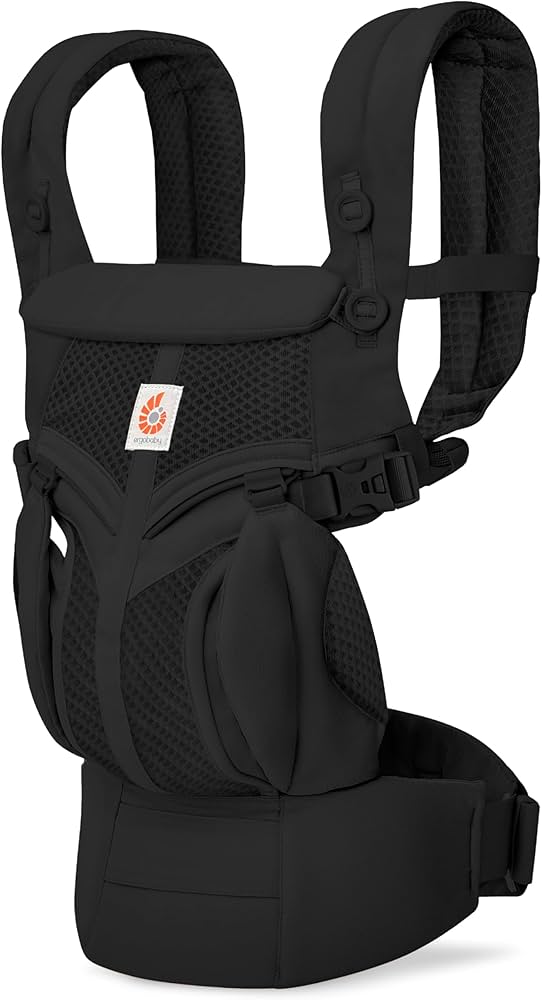
Ergobaby Omni 360 All-Position Baby Carrier
- ✓ 4 carrying positions including inward, forward, hip and back
- ✓ Adjustable seat width for ergonomic M-position from newborn to toddler
- ✓ Structured bucket seat with lumbar support waistbelt
* We earn a small commission — at no extra cost to you.
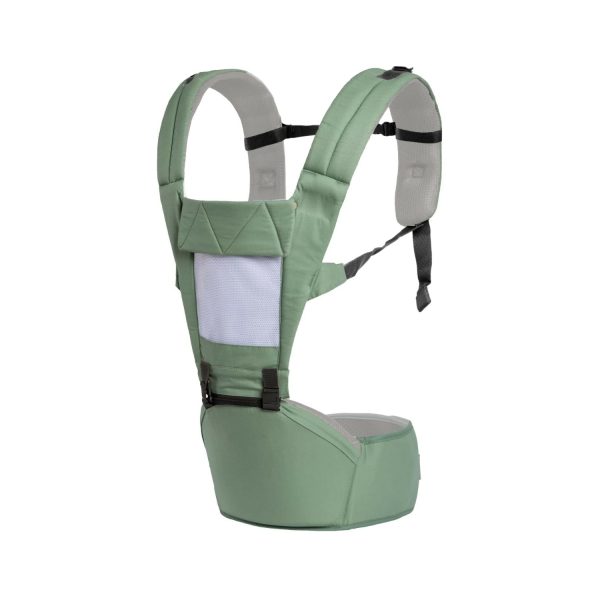
R for Rabbit Upsy Daisy Smart Hip Seat Baby Carrier
- ✓ 4-in-1 carrying positions with removable hip seat
- ✓ Breathable 3D mesh fabric suitable for Indian climate
- ✓ Wide seat base for proper hip positioning
* We earn a small commission — at no extra cost to you.
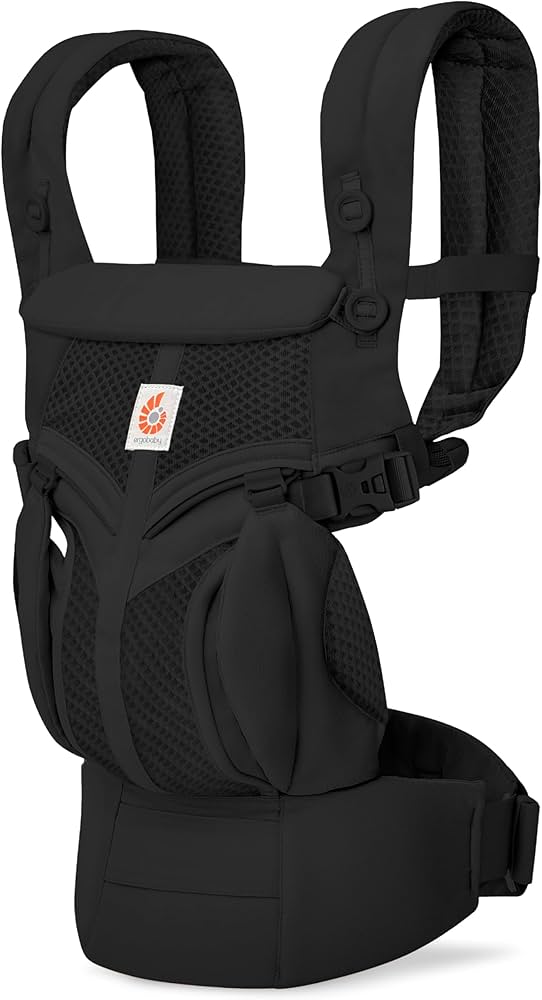
Ergobaby Omni 360 Cool Air Mesh Baby Carrier
- ✓ Advanced mesh fabric for maximum breathability in hot weather
- ✓ All 4 ergonomic carrying positions with newborn to toddler adjustment
- ✓ Padded shoulder straps and supportive waistbelt for weight distribution
* We earn a small commission — at no extra cost to you.
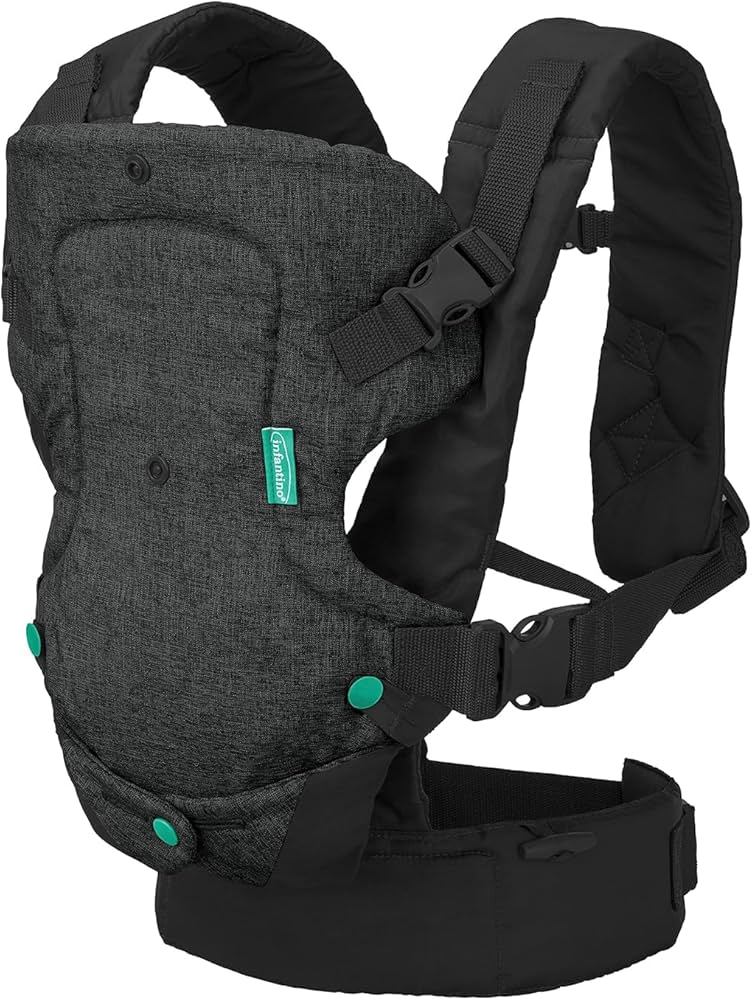
Infantino Flip Advanced 4-in-1 Convertible Carrier
- ✓ 4 carrying positions with narrow seat for newborns and wide seat for older babies
- ✓ Wonder Cover bib keeps carrier clean
- ✓ Adjustable seat supports baby in ergonomic seated position
* We earn a small commission — at no extra cost to you.
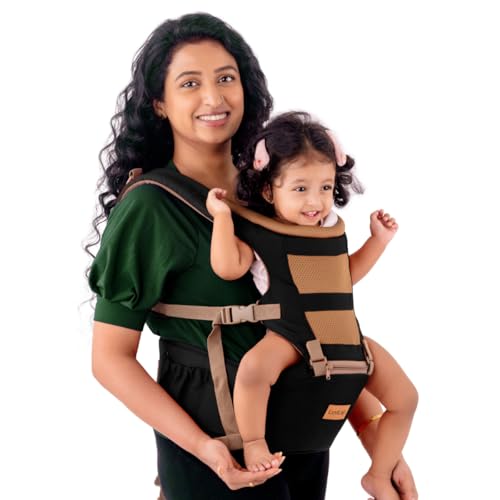
LuvLap Elegant Baby Carrier with Hip Seat
- ✓ Detachable hip seat with storage pocket
- ✓ 6 carrying positions for versatility
- ✓ Breathable mesh panel on back
* We earn a small commission — at no extra cost to you.